
The Land
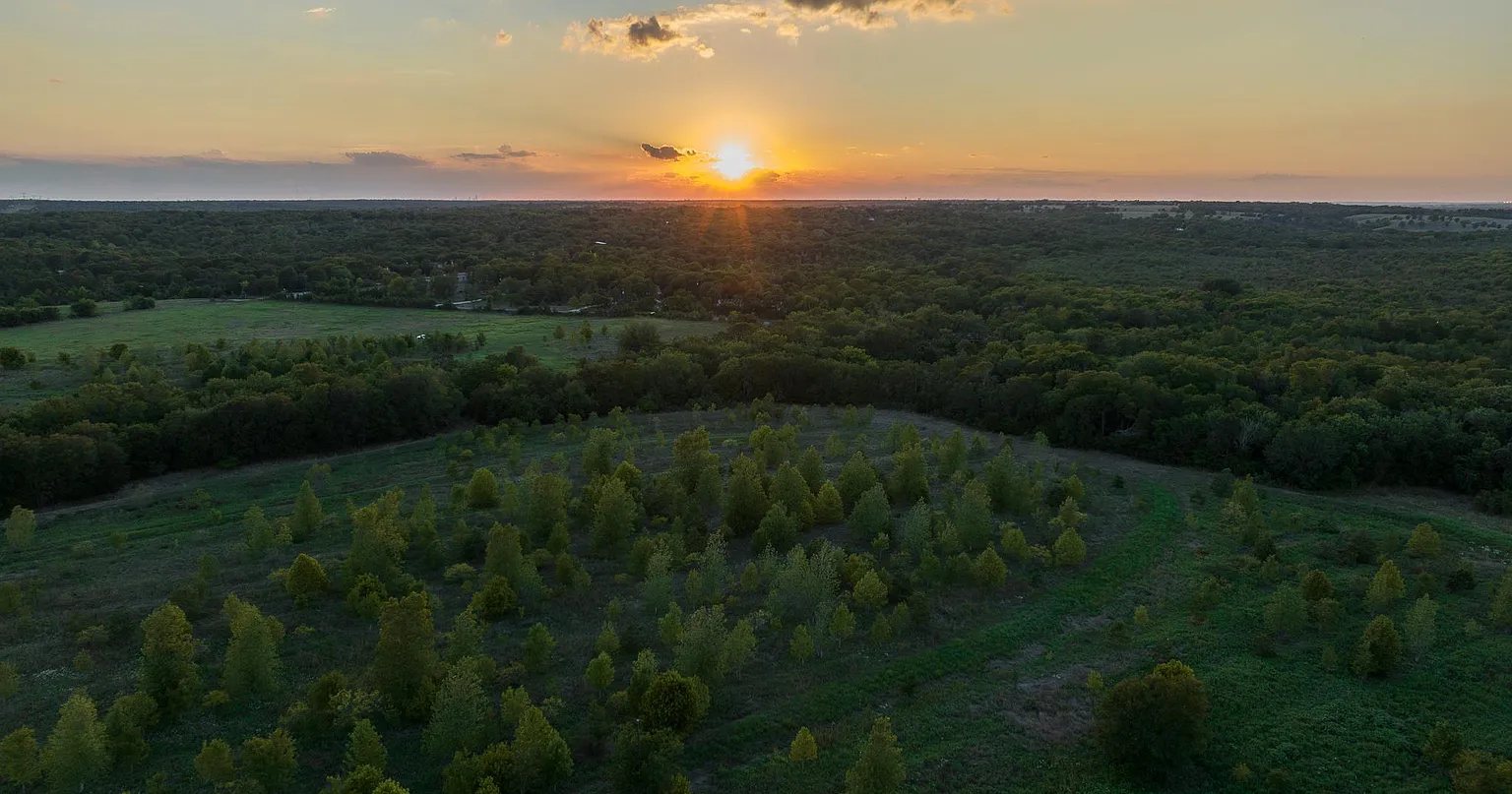
One hundred and forty-four acres of restored wetland, creek bottom, and native prairie — protected in perpetuity.
An easement,
held forever
In 2012, 109 acres of Double Creek were placed under a permanent conservation easement and became part of the Wilbarger Creek Mitigation Bank. Wetlands were restored, stream channels rebuilt, and the creek bottoms given back their natural function.
The easement is held by the Pine and Prairies Land Trust. It means this land stays wild — not for a season or a lifetime, but for good.
A managed mosaic
The property is tended as distinct habitats, each managed for the wildlife that depends on it.
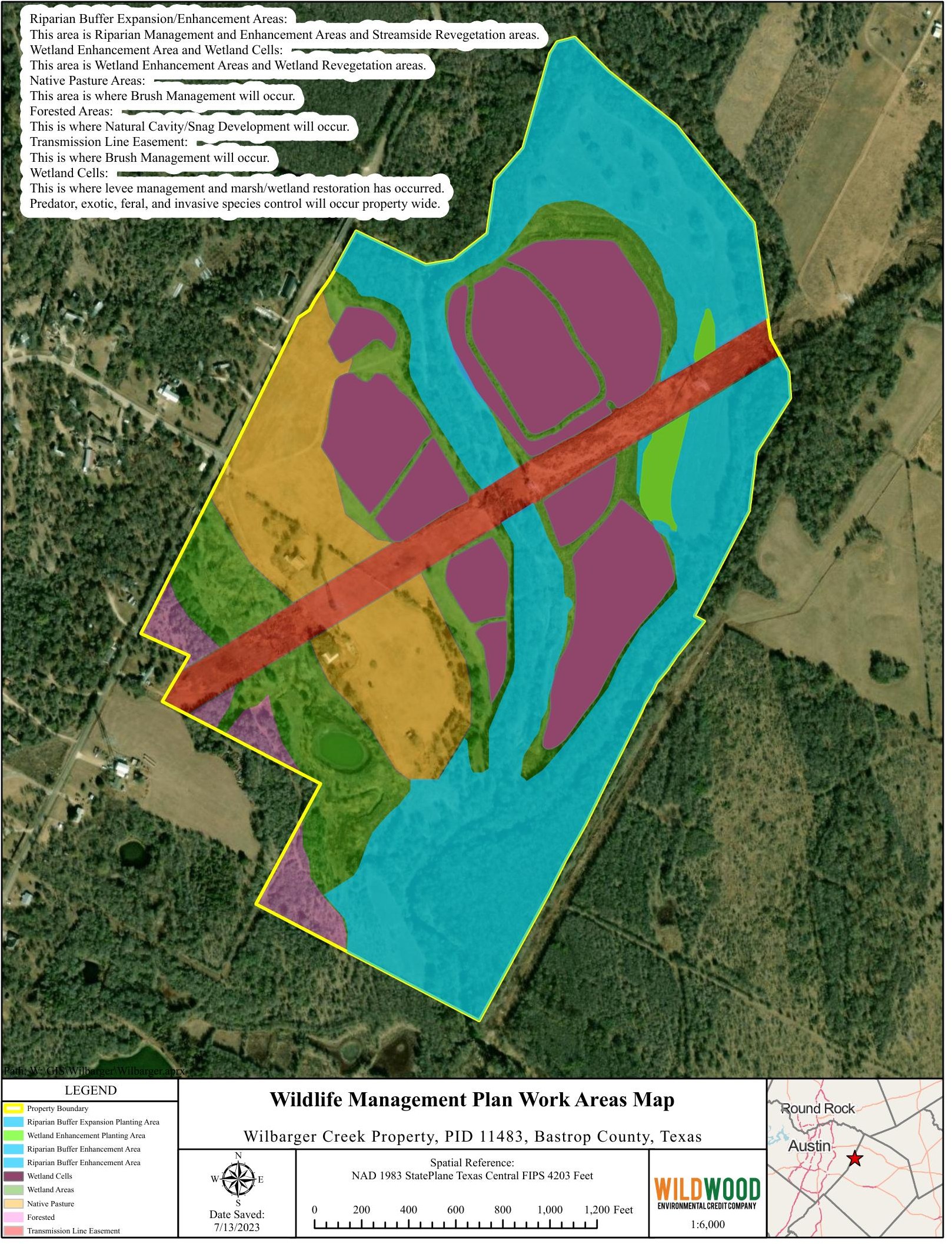
Riparian Buffers
The creek banks are kept planted and free of livestock — grazing deferred for over a decade to hold the soil and shade the water.
Wetland Cells
Water-control structures open and close with the seasons, holding water for the species that need it and managing moist soil through the year.
Native Pasture
Grassland is kept in an early, open stage with seasonal mowing — the way ground-nesting birds and forage species like it.
Forested Snag Habitat
Dead and dying hardwoods are left standing, three to five per acre, as cavities and perches for birds and small mammals.
Species Control
Invasive and feral species — fire ants, feral hogs, coyotes — are managed across the property so native wildlife can hold its ground.
The abundance you'll see in the gallery is the result of this work.
See what lives here